
Plastics: Friending The Essential Demon.
By Rahul Tiwari. With inputs from Tarun & Celia Cherian. Rahul Tiwari an engineer, technologist and business analyst has worked in the petrochemical industry. And so is ideally placed to talk about it. He has also invented a critical plastic recycling machine.

We all use plastic extensively – starting from household items like tool brush, plates, laptops, mobiles, water bottles etc. to healthcare industry items like syringe, hospital equipment, prosthetics etc. You will also find plastics in things like artificial roofs, heat insulation, soundproofing, paints, electrical cables etc. Look around and you will find plastics everywhere, from picture frames, vehicles, clothes, shoes and to the rockets. Plastics are critical to modern life, without which life seems unimaginable. But let us take a breather and ask when did this avalanche begin and how?
Looking at The Inventors of Plastic...
The oldest use of synthetic resins or polymers lies in prehistory. Where fats and fabrics were merged to create water-proof fabrics. Some 170,000 years ago mankind began to wear clothes. Presumably fur. Evidence suggests, something like 60,000 – 36, 000 years ago mankind began wearing clothes of fabric – linen, hemp, flax and wool. If they laced it with linseed oil or varied fats to make it more flexible and water resistant, it became a polymerized fabric. A natural resin or natural plastic. While we know it was undoubtedly done, proof of such is hard to come by. We know however, this was done in medieval times. Oil cloths became a popular flooring material in Britain and Europe in the 1800’s.
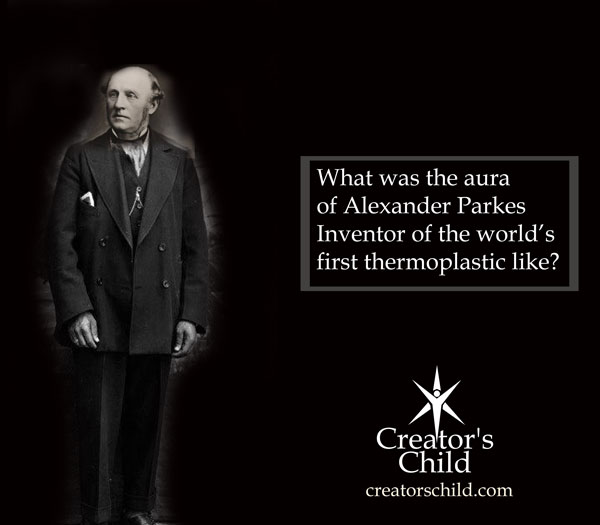
Synthetic plastics, as we know it were invented by a range of inventors, beginning in the early 1800’s. Thomas Hancock 1786-1865 created waterproof fabric or elasto-fabrics, but he did not just let in the ugliness of synthetic resins, he was also marvelously among the first to be highly conscious of the waste generated and was among the first to create a masticator machine to deal with waste rubber. The next in line was Alexander Parkes 1813-1890, invented Parkesine. A celluloid derived from nitro-cellulose, the world’s first thermoplastic. Then we have Leo Baekeland 1863-1944 who in the 1900’s developed a range of plastics, Velox and Bakelite. Questioned why he had entered the field of synthetic resins, he unashamedly answered to make money.
And so before we question plastics, see the damage they cause… let us look at the auras of some ‘inventors of plastic’, Let's start with Parke. We can understand what motivated him, shaped him? What chakras spun in them.
Ok take a look at the face, now do an aura scan. What do you get?
Now see what we saw.
Everytime we do an aura scan we look for confirmation: The red at the root was confirmed by the fact he had 2 marriages. {Section added by Tarun & Celia}.

The Dark Side of Plastic...
Now to return to the main article, but why is plastic ‘such a dependable’ thing being questioned so much? With government banning use of plastic carry bags, food wrappers, plastic bottles etc. Does it have a dark side? Let’s explore.Most of the plastic today is majorly derived from fossil fuel and is made-up of a ‘synthetic’ polymer. Word ‘synthetic’ is important here, which means it does not occur naturally in nature, it is man-made. Since it is man-made, Nature does not {as yet} know how to decompose it. All naturally occurring elements can be decomposed by nature. But that advantage is, of course, also a great disadvantage. It takes hundreds of years for a plastic to decompose, which is leading to alarming plastic pollution. And worse as it ages it fragments into smaller particles.
The World has seen steep rise in production/ usage of plastic especially post World War II. During World War II plastic production only in the United States increased by 300%. Worldwide production of plastic increased exponentially, from 2.3 million tons in 1950 to 448 million tons by 2015. Production is expected to double by 2050. With rise in plastic production, plastic pollution has also risen.
Dangerous to Marine Life and Oceans.
Most worrisome, reports suggest that much of our plastic junk - have found their way into oceans, where they collect in giant floating junkyards. At least 14 million tons of plastic end up in the ocean every year, and plastic makes up 80% of all marine debris. Plastic pollution has impacted wildlife severely - millions of animals are killed by plastics every year, from birds to fish to other marine and land-based organisms. Nearly 700 species, including endangered ones, are known to have been affected by plastics.MicroPlastics Disastrous for Human Health.
A recent study by Dutch scientists, revealed that microplastics was found in human blood. Blood sample showed traces of PET plastic, which is widely used to make drink bottles, while many samples also had polystyrene plastic which is used for making disposable food containers and many other products. The tiny pieces of mostly invisible plastic have already been found almost everywhere else on Earth, from the deepest oceans to the highest mountains as well as in the air, soil and food chain. Microplastics have also been found in freshly fallen snow in Antarctica for the first time in 2022.These tiny bits of micro-plastic floating in our veins, and bodies will trigger a host of health complications. Heart attacks, lung-clots, brain-strokes, immune-issues, cancers are the foreseeable crises about to overwhelm us.
The Ray of Hope...
It’s evident that plastics have a valuable place in our lives, attempts are made to make plastics safer and more sustainable. Some Rays of hope to improve the plastic pollution:
>> Bioplastics are being developed, which are made from plant crops instead of fossil fuels, these are more environmentally friendly than conventional plastics. For example, Hemp plastic are made from Cannabis plant has same property as synthetic plastic and gets easily degraded.
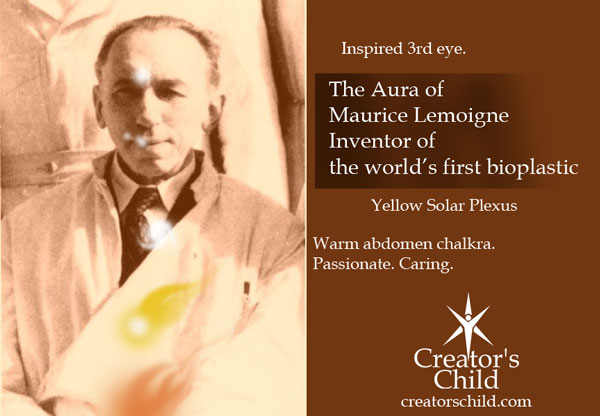
Now here is the sad and tragic thing about plastics and all who have blind faith in Science, and Technology. Did you know the first Bioplastic was not developed in the 1990’s or 2000+. It had been invented by Maurice Lemoigne in 1926. A sideproduct of his work he worked from his work on the bacterium Bacillus megaterium. For about 70 years a great discovery lay hidden. Why? Because petroleum was inexpensive and abundant. And plastics to the petroleum industry is big business. {Commentary added by Tarun & Celia}.
>> It was recently discovered that mealworm, waxworm and super-worm, are able to eat common types of plastic – including polyethylene, a nonbiodegradable type of plastic that is the most commonly used worldwide. We now include a key image of the discoverer of this break through. Take a look at scientist Wei-mun's aura, what do you see?
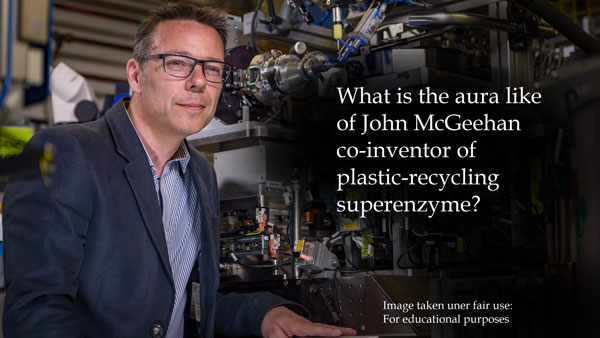
>> Scientists from the University of Portsmouth have engineered a new “super-enzyme”. This enzyme has the ability to break down plastic in a few days. We now include a key image of the lead bio-engineer of this break through. Take a look at the scientist's aura, what do you see?
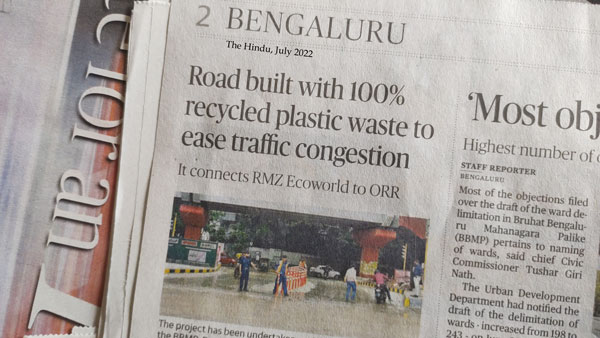
>> Plastic Roads: making roads from plastic is a good use of non-recyclable plastic. India has already constructed 703 Km of highway road using plastic waste. In fact this technology has been patented by an Indian Scientist!
>> Converting plastic into fuel: Processes of converting plastic waste into fuel is called pyrolysis. A professor in India has converted tonnes of non-biodegradable plastic into petrol. He is supplying this petrol to small and medium enterprises at half the price of actual commercial petrol.In fact, when I was in engineering college, a team of us created a process and technology that turned plastic into fuel.
>> Eco-bricks: bricks made from plastic waste can be used to make homes. In South Africa a school was built from Eco-bricks.
>> Recycled Plastic apparels: Shoes and clothes are made from recycles plastic.
How We Can Help The Earth...
It is hard today to avoid plastic as it has become an integral part of our daily life, but we must learn how to reduce plastic use. Following are few tips that we can implement and do our bit:
1. Say no to plastic carry bags. Use jute or cotton bags
2. Use alternates for daily plastic items:
- use bamboo straw instead of plastic straw
- avoid plastic cotton buds – instead use fluid ear wash or bamboo cotton buds
- avoid using takeaway coffee cups – instead use reusable mugs
- avoid using plastic food container – instead use reusable non-plastic container
- avoid using plastic plates – instead use porcelain or glass plates
- opt out of using plastic cutlery
3. Improve waste segregation: segregate your plastic waste, so that it can be recycled easily
4. Take part in cleaning initiatives like clean a beach, road, society etc.
5. Do not litter in open drains or river to avoid ocean plastic pollution.
6. Avoid plastic water bottles. Carry your own bottle while travelling.
7. Don’t completely cut off the corners of milk, curd, chips, or other packets – these small plastic bits cannot be recycled.
8. Avoid tea bags and use a tea strainer - Plastic tea bags can release about 11 billion microplastics into a single cup of tea!
9. Switch your soap /shampoo bottles for bars
10. Choose Wooden Combs
11. Use menstrual cups instead of pads.
12. Avoid wet wipes.
13. Spread awareness - If people are aware of the problem, maybe we will choose to buy things that use less plastic.________________________________________________
Debate Do We Contain Plastics or Eliminate it? ...
Now there are many in this circle that have been doing their bit to combat Plastic Pollution and Climate Change, to put the spotlight on a few: Catherine, Manisha, Tina, Zahid... For example, some have campaigned against ultra-thin packaging that disintegrate, and are difficult to recycle. Or worked to eliminate plastic straws or waxed straws.
However only 20-60% of plastics are recyclable by today's technologies. And so a critical step has been to prevent plastics from reaching the oceans. Second, we consumers are doing our bit to separate waste so plastics can be reused.
But even so-called good plastic, as of today, can only be recycled thrice, post-which it will find its way into landfills from which dangerous chemicals leach out into the soil. And micro-plastics into the ecosystem and our blood streams.
Poly-plastics, with multiple coatings throw up issues not easily addressable for recycling. Now these are typically widespread in the packaged food industry vs the unorganised sector. And today Governments tend to target the unorganised sector than the corporates.
The real problem must also be addressed on the supply side too. The Petroleum industry finds plastic a very useful by-product. So no matter how much we consumers reduce bad plastics, and segregate, with production increases of virgin plastic and the wholesale use of plastic in food packaging needs to be reduced and eliminated.
As of today cellulose-plastic can provide a useful alternate. And in 5 years, the use of plastic can be drastically reduced. There's a lot we can do personally. An international home--delivery company was using horrendous amount of plastic. One of Celia's friend is high up in the global leadership. She spoke to her. The friend thanked her and said many friends had approached her and they had formulated a moveaway from plastic to cardboard. {Every little bit helps}.
Now there are other steps that can be done these edge from the rational to the spiritual. You have been familiarising yourself with it.
________________________________________________
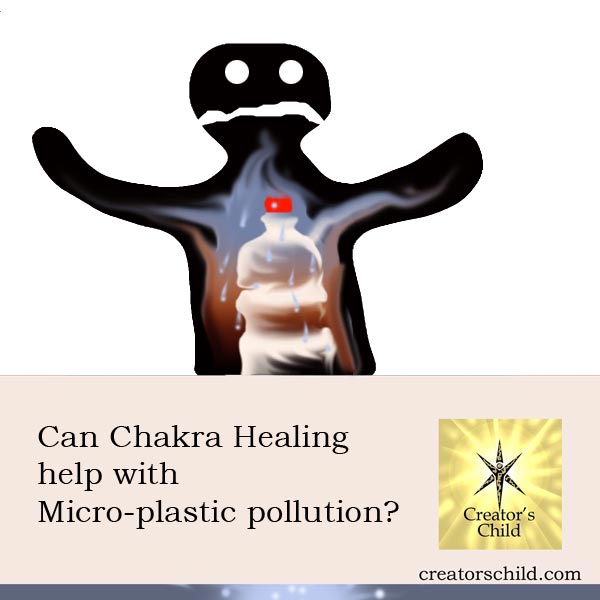
Minimising The Health Issues Through Chakra Healing...
There are two techniques we share that may ease the plastic in the body load.
Asking the body to Not Absorb plastics. - The Solar plexus and liver chakras can help signal to the body not to absorb plastics. Clench your left fist at intestine level, move your right hand as if brushing energy down ward. Now chant The Mantra 'Your Core Chant +SaknakkZishrakeehee as you do this. Do it at the end of the meal. Remember if you do this mantra you may need Vitamin B supplements.
Asking the body to eliminate plastics. Once, the plastic is in the blood stream, it places stress on kidneys and arteries. Once a week, in the morning, rotate both hands in front of the lower abdomen. Now chant TheMantra 'Your Core Chant +SaknakkZishrakeehee as you do this. -- Celia & Tarun Cherian
NOTE: These Mantras & healing practises have not been tested on a large scale, they create aura effects that may have a positive effect. If you test it out for yourself do let us know your experience. The first technique should cause shifts in the navel/ solar chakra. The 2nd technique should shift the abdomen area functioning.
________________________________________________
Changing The Scientist Behind The Science...
Celia & I have interspersed the article written by Rahul with Aura Scans of the varied plastic inventors {All images taken from the net under fair use copyright}. As we look at them we realise that virtually all had brilliant 3rd eyes. But the ones who cared, who also looked at the side effects of their inventions had good roots, even fine crown chakras. And this is a key insight. Education cannot be just about intelligence, but about caring and groundedness. The truth is the future does not just emerge. It is a result of the hopes, dreams, lives of many often shaped by leaders. -- Celia & Tarun Cherian
________________________________________________
Asking Nature to Help...
Now when many look at nature they see an inefficient romanticised being. But the real problems created by science need to be addressed by science. And so as Rahul mentioned plastic eating bacteria are being discovered and plastic-consuming enzymes are being created. But what if we could ask nature to help? For example in many parts of the world extreme or new bacteria are being discovered. In hot springs, in Antarctica, In The Russian Tundra.
Now many cancerous tumours are nature's way to attempt to create newplastic filtration and digestive organs, with nature's pace this may take 3 centuries, while the anticipated brain-stroke, arterial diseases, cancer increase and kidney crisis, will erupt sooner. However if we ask nature to help it can add a host of plastic eaters in less tan a century. For those among us adept at dealing with shaktis this is your opportunity. -- Celia & Tarun Cherian.
How? Those interested, willing to invest in an hour a week are invited to write in.
________________________________________________
Thanking Rahul Tiwari for his wonderful article
that we added to with aura scans, questions to debate, commentaries.Yes, eventually one day plastic bags will be a thing of the past. And plastic from being ubiquitous will be aberrant. But, today we need to be smarter and more sensible about how we handle the convenient demon. We have to be thoughtful on how we make, use, and recycle plastic. We must do our Best! Or else we choke on it.



New Can we Escape Mass Destruction? Article 1. by Masters Tarun & Celia Cherian published: Aug 2021.
The Green Imperative. by Tarun & Celia Cherian, June 2017.
The Need For Lifeonomics: By Tarun Cherian, June 2017.

A breathtaking encounter with a Butterfly who is a Sage. Animal Whisperers. Celia & Tarun Cherian give you a little book packed with a sky of wisdom. And magnificent meditations. Read More! The Butterfly Pearl A Spiritual Classic. Packed with Stunning Images
Now! Order The Butterfly Pearl as an ebook on Amazon Only Rs 77!

On 28th Nov 2016, Aura Master Tarun Cherian looked out of his window to an amazing sight. A world covered with shimmering bubbles of light. As he interrogated the experience he realised it revealed how our emotions intertwine with the world,
how we are deeply interconnected, how the hard world is shaped through soft emotion.
Now! Order The Bubbles of Joy Vision as an ebook on Amazon Only Rs 77!

What happens when you look with God's Eyes? Celia & Tarun Cherian give you a little book packed with a sky of wisdom. And magnificent meditations. Read More!
Just Uploaded! God and The Peacock-tailed Pigeon as an ebook on Amazon Only Rs 100!

A little walk with a dog through a middle class neighborhood of Bangalore, becomes a journey through wonderland! When you borrow the Aura Eyes of Tarun & Celia Cherian, the insightful nose of Buffy, and the senses of God, a humble street corner is filled with mystery. The roads shake off tar and choose to dress in Gold. Walkers look like ancient prophets. Children blaze with innocence. Ghosts appear. Shaktis stir. Solar Angels are revealed.
NEW! Order The Aura Walk on Amazon Only Rs 55!
Collage Images Courtesy: Wiki commons, sledgirl mt @pxabay.com